Geobridge · Enterprise software & practical AI

Delivering Results
AI Accelerated
with people in command

We turn high-value processes into managed production systems using the software and data you already trust.

For more than twenty years, Geobridge has created, integrated, and modernized the systems behind banking, payments, education, and enterprise operations. We bring that production discipline to AI: define the outcome and full cost, bound what the system can see and do, introduce it without a big-bang cutover, and scale only when the evidence supports it.

Supervised AI illustrated
Work moves down the line and every consequential action passes a human gate.

Why Geobridge

Models are available. Production discipline is scarce.

Most organizations do not need another AI tool or demo. They need a governed way to connect approved models to trusted data and existing systems — without creating another silo. We map the workflow and system boundaries, establish business and technical ownership, define the full-cost case, and build the controls and measurements required for production.

88%

Still at the earliest stages

of organizations remain at the personal-productivity or embedded-assistant stages of AI adoption.

71%

Would use more, with trust

of AI users would use AI more if they trusted it not to make mistakes on important work.

5×

The trust gap

79% of decision-makers already use AI agents; only 20% would trust one with a financial transaction.

20+

Years delivering production systems

of integration, automation, modernization, and security-conscious design behind every engagement.

First three readings: Notion, Inside the AI Transformation: The Great Renovation (2026) — a vendor-published global study of 6,118 AI decision-makers and AI users. The fourth is our own delivery record.

Services

Six paths we take to solve production problems.

The six paths below are not packaged demos; they are disciplines our teams practice. Each engagement starts with a recurring workflow, connects to the systems and data you already run, and includes the controls, economics, adoption, and ownership required for production.

Path I

Supervised Autonomy: AI Agents for High-Value Work Under Control

Automate routine steps in multi-stage work such as processing, routing, reconciliation, and drafting while the right person retains authority over consequential decisions. Our answer is architecture, not assurances.

  • Approval by consequence — routine work flows automatically; payments, customer decisions, record changes, and other high-impact actions stop for the designated approver.
  • Least-privilege access — each workflow uses only the identities, tools, data, and limits required for its job.
  • Containment, evidence, and recovery — abnormal behavior can be stopped; consequential actions are recorded in protected, tamper-evident logs; and rollback, compensating transactions, and recovery runbooks are tested.

Path II

Modernize Critical Systems Without a Big-Bang Rewrite

Improve the workflow around critical legacy systems in phases, preserving data and daily operations while adding better interfaces, automation, and intelligence.

  • Recover the rules before changing the system — turn undocumented code and operating knowledge into reviewed documentation.
  • Protect current behavior — build characterization tests around what the business relies on today.
  • Modernize in stages — introduce new interfaces and services around existing data, with controlled cutovers and a fallback path.

Path III

AI Governance as an Operating Layer

Create one reusable operating layer for approved AI: who can use what, with which data, at what quality, cost, and risk threshold.

  • Evaluation and change control — test representative and adversarial work against a defined quality bar before launch and after every material change.
  • Inventory and ownership — maintain a shared view of models, tools, workflows, business owners, technical owners, data boundaries, usage, and spend.
  • Monitoring and evidence — track outcomes, drift, exceptions, approvals, retention, and risk in records your operators, auditors, and regulators can use.

Path IV

AI for Regulated and High-Consequence Work

Reduce manual work where “mostly right” is not acceptable, without weakening review, traceability, or accountability.

  • Grounded document workflows — draft from approved systems of record with source trails and reviewer sign-off.
  • Fraud and identity hardening — add out-of-band verification, identity checks, and payment-flow controls where voice, video, or email alone can no longer be trusted.
  • High-impact decision safeguards — test for error and bias, preserve human override, and document the basis for decisions affecting people or money.

Path V

Private, Local & Owned AI

Your data. Your premises. Your model. For many organizations the biggest AI blocker is that sensitive data cannot leave the building — run each workload inside the data boundary it requires and route it to the least costly approved model that meets the quality bar.

  • Private & on-premises deployment — self-hosted and sovereign-cloud AI where confidentiality, residency, or regulation rules out public APIs — including fully disconnected environments.
  • Workload-based routing — use smaller or private models for routine sensitive work and approved frontier models only when their added capability earns its cost and risk.
  • Portability by design — we select, benchmark, and swap models on your requirements, isolate provider-specific interfaces, pin versions where supported, maintain regression evaluations, and document fallback strategies.

Path VI

Production First — Not Pilot Purgatory

In PwC’s 2026 global CEO survey of 4,454 CEOs across 95 countries, 56% said AI had produced no financial return so far. The pattern behind that number is documented: pilots built without integration, metrics, or a path to production. We scope for production from day one.

  • Start small, start real — a focused AI readiness and data-flow assessment: where AI fits, what your data supports, what it costs — and where AI is not the right tool.
  • Measured like a business system — defined KPIs (cycle time, error rates, throughput, cost) tracked from pilot through production.
  • Stage-gated funding — approve a bounded first production release and expand only after agreed quality, workflow, risk, adoption, and financial thresholds are met.

The approach

Start with one workflow. Protect the operation. Scale what proves value.

Four controlled stages keep current work running while the new workflow is validated with the people who own and use it.

  1. 01
    Stage one · the value

    Define the result and full-cost case

    Observe the current workflow with its owner and users. Baseline cycle time, volume, cost, errors, rework, customer effect, and risk. Map fragmented tools and data, define the accepted outcome, and set the total-cost ceiling before selecting a model.

  2. 02
    Stage two · the trust layer

    Design the controls and ownership

    Classify the data and actions; map identities, tools, processors, and destinations; then define permissions, approval thresholds, evaluations, logging, retention, incident response, fallback, and rollback. Name the business owner, technical owner, data steward, and risk approver.

  3. 03
    Stage three · live systems

    Run a bounded production release

    Connect a limited release to real systems and, where practical, run it alongside the current process. Co-design with the people who do the work; test representative and adversarial cases; prepare users; and validate quality, latency, cost per accepted outcome, security, exceptions, usability, failure isolation, and recovery before cutover.

  4. 04
    Stage four · production

    Measure, learn & expand

    Compare results with the baseline. Track repetitive steps removed, cycle time, error and rework, adoption, user confidence, spend, risk events, and financial impact. Expand only if the workflow improves the agreed business number and the team can operate it reliably; otherwise stop, redesign, or retire it.

Precision is not accidental
It’s engineered.
Exploded chronometer movement Crown and stem wound by hand, mainspring barrel, meshed gear train, ruby-jeweled escapement and an oscillating balance wheel — the architecture of supervised autonomy. CROWN & STEMWOUND BY HAND — ALWAYSMAINSPRING BARREL20+ YEARS IN RESERVEGEAR TRAINYOUR WORKING SYSTEMSRUBY JEWELSTHE APPROVAL POINTSESCAPEMENTAPPROVAL GATESBALANCE WHEELHUMAN OVERSIGHT · 2 HZ

7,200 decisions an hour — automated verification lets only consequential actions that require review escape through a gate.

Crown: wound by hand · mainspring: 20+ years in reserve · gear train: your working systems · ruby jewels: where your systems take the load · escapement: approval gates · balance: human oversight

Straight answers

The questions leaders and their teams ask — answered in plain language.

No motion, no machinery here — just the answers, in plain language.

“Will our data end up training someone else’s model?”
Not on our watch. Engagements begin with a data-flow and access audit: what data enters which AI systems, where it is stored, who can reach it, and how long it is retained. We architect for least-privilege access, contractual no-training clauses with model providers, and — where the data warrants it — private deployment where nothing leaves your environment, and your security and data owners approve the boundary before production.
“What stops an AI agent from doing something we can’t undo?”
Architecture. Scoped permissions, approval gates before irreversible actions, kill switches, immutable audit logs, and rollback that has actually been tested. If a proposal for agent automation doesn’t include those, it isn’t finished engineering.
“Most AI pilots never pay off. Why would ours?”
Because we don’t build pilots; we build the first phase of a production system. Integration with your real systems, defined success metrics, and phased rollout are in scope from the first week — the three practices that research consistently finds separating AI programs that deliver from those that stall.
“How do you deal with AI being confidently wrong?”
We treat accuracy as a pipeline property, not a model promise: outputs are grounded in your systems of record, checked by automated verification gates, and reviewed by a human before anything consequential leaves the building. And where the error cost is too high for that to make sense, we will tell you not to use AI there.
“Our employees are already using AI tools we never approved. Now what?”
Bans don’t work; alternatives do. We build governed AI gateways — approved models, data-loss protection, logging, clear usage policy — that give your teams the speed they already get from consumer tools, with the visibility and control you currently lack.
“Can this survive our auditors and regulators?”
That requirement shapes the design, not the paperwork afterward. Audit trails, explainability, bias testing, and human-oversight records are built into the architecture from day one, so the evidence your compliance team needs is produced by the system itself.
“You’ve been building software for twenty years — but where does your AI experience come from?”
AI is the newest part of our work; production engineering is not. For more than twenty years we have built and modernized systems with real data, business rules, integrations, security, uptime, and regulatory consequences. We pair current AI engineering with those proven disciplines, state which capabilities are established and which are new for the engagement, and define the evidence required before anything reaches production.
“Our core systems are decades old. Can AI attach to them without a rip-and-replace?”
Yes — that is our home ground. In most organizations the old systems are where the value sits, and the same methods our teams use to modernize them carry AI into them safely: characterization tests that lock in current behavior before anything changes, incremental integration instead of big-bang rewrites, and controlled interfaces that expose core systems to AI without destabilizing them. Modernization is the on-ramp to AI — not the price of admission.
“What will this cost — total?”
No honest total exists until the workflow, data, integrations, risk level, and expected volume are clear. The first engagement makes that cost visible before production funding: delivery and integration, data preparation, infrastructure, model and tool usage, evaluation, retries, human review, security and compliance, training, monitoring, support, and your team’s time.
“Who owns it after Geobridge leaves?”
You do. Before production we name business, technical, data, and risk owners; define service levels and alert thresholds; and deliver architecture records, evaluation results, runbooks, and training. Ongoing support can continue, but operation should not depend on knowledge held only by an outside agency.

Evidence

AI is new. The engineering disciplines it depends on are not.

These are delivered systems with outcomes on record — task times cut from minutes to seconds, design cycles from days to minutes, a banking platform trusted in production for 15+ years.

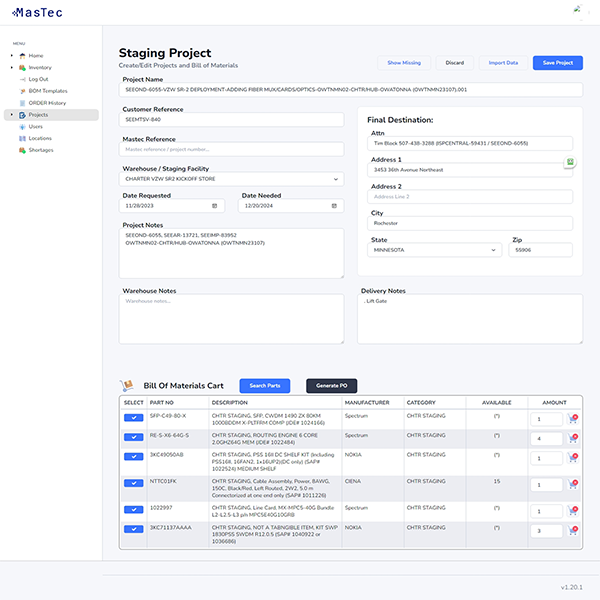
Staging and inventory control system interface

Staging & Inventory Control

Confidential client

Relevant foundation: phased modernization around a live ERP system — automation and transparency without disruption.

, a Fortune 500 company with nearly 22,000 employees, relied for two decades on an aging custom system for cell-tower staging and inventory. Geobridge replaced it with a modular application built on ’s existing database: direct customer access, manual data entry eliminated, and task times cut from minutes to seconds — deployed with minimal risk and downtime.

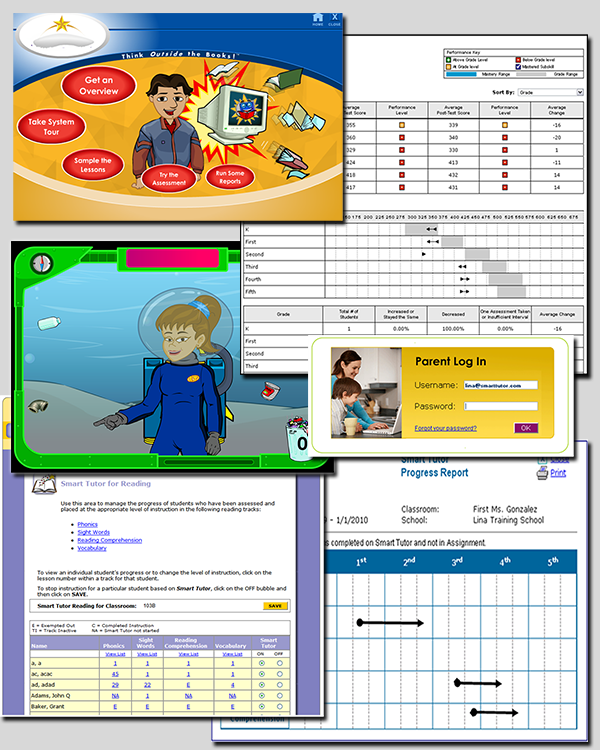
K-8 instruction platform interface

e-Learning Platform

CA

Relevant foundation: data-informed personalization, platform scale, acquisition integration, and a clean handover to an internal team.

When set out to lead web-based learning, Geobridge created the SmartTutor instruction platform. The platform used machine learning to provide dynamic, predictive assessments and automatically personalize reading and mathematics paths from students’ diagnostic results. Following its acquisition by and rebranding as , we integrated the system into ’ environment and supported the transition to their internal development team. Today serves over 11 million students — roughly one-third of K-8 learners nationwide.

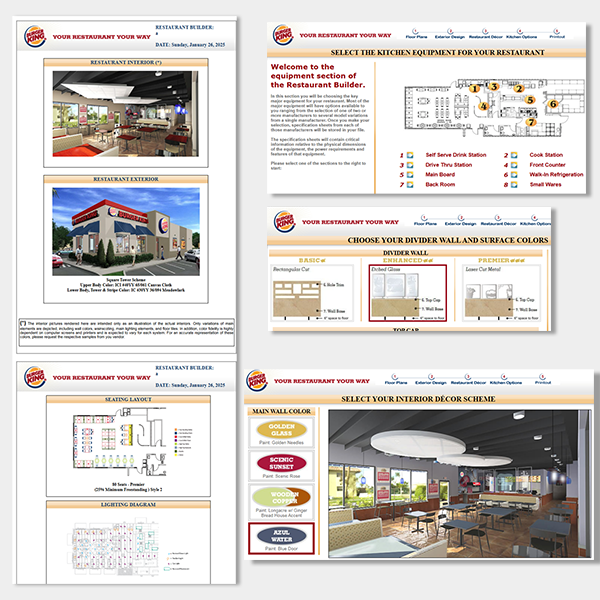
Restaurant configuration wizard with 3D renderings

Guided 3D Configuration

Confidential client

Relevant foundation: encoding complex rules and dependencies into guided decision support with accurate configuration.

For a chain of 19,000+ restaurants in more than 100 countries, designing a new location once took days of collaboration with HQ and vendors. Geobridge built a guided wizard presenting realistic 3D renderings across thousands of layout, décor, and equipment combinations — ensuring compatibility, calculating cost, and communicating choices to vendors. Days became minutes.

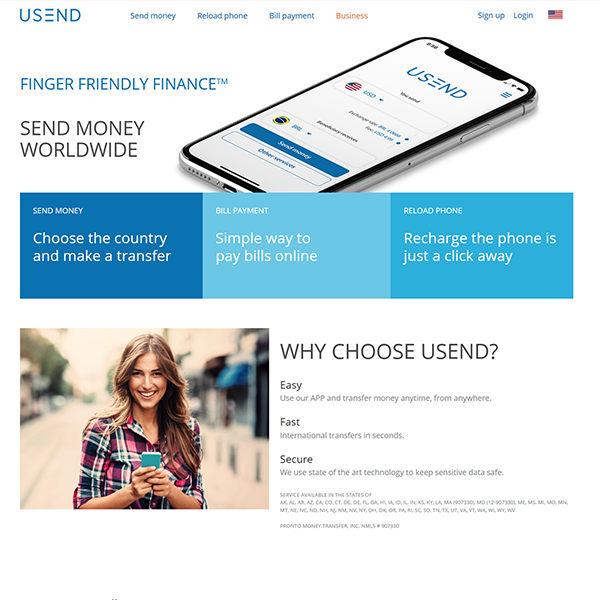
International payments application

Cross-Border Payments Platform

Confidential client

Relevant foundation: secure integration with hundreds of financial institutions, high-volume real-time APIs, global compliance.

grew from storefront remittances into a platform sending money to 50+ countries. Geobridge engineered its integrations with hundreds of financial institutions and built the payments API powering large-scale, real-time cross-border corporate payments. Acquired by — NASDAQ-listed, 30 million+ customers became the Global Account Super App.

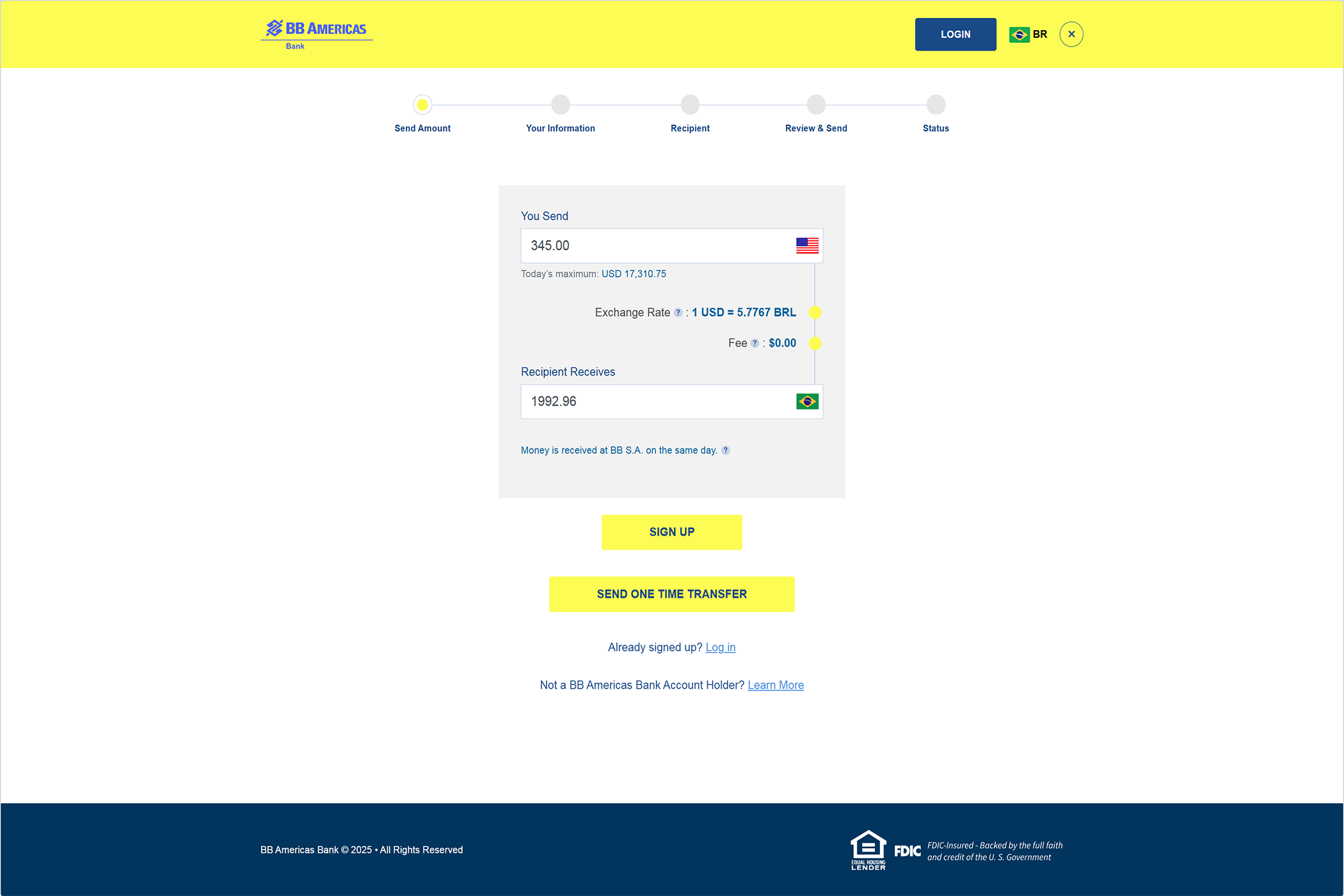
Cross-border web banking application

Cross-Border Web Banking

Confidential client

Relevant foundation: long-term delivery in a regulated environment — core-system integration, compliance controls, real-time financial data.

For over 15 years, the U.S. division of Brazil’s second-largest bank — 80 million customers — has trusted Geobridge for cross-border payments. For its FDIC-insured U.S. subsidiary we built the application that integrates directly with the bank’s core system, moving funds from U.S. accounts to Brazilian accounts across web and mobile while automating payment instructions, compliance management, real-time exchange rates, and accounting.

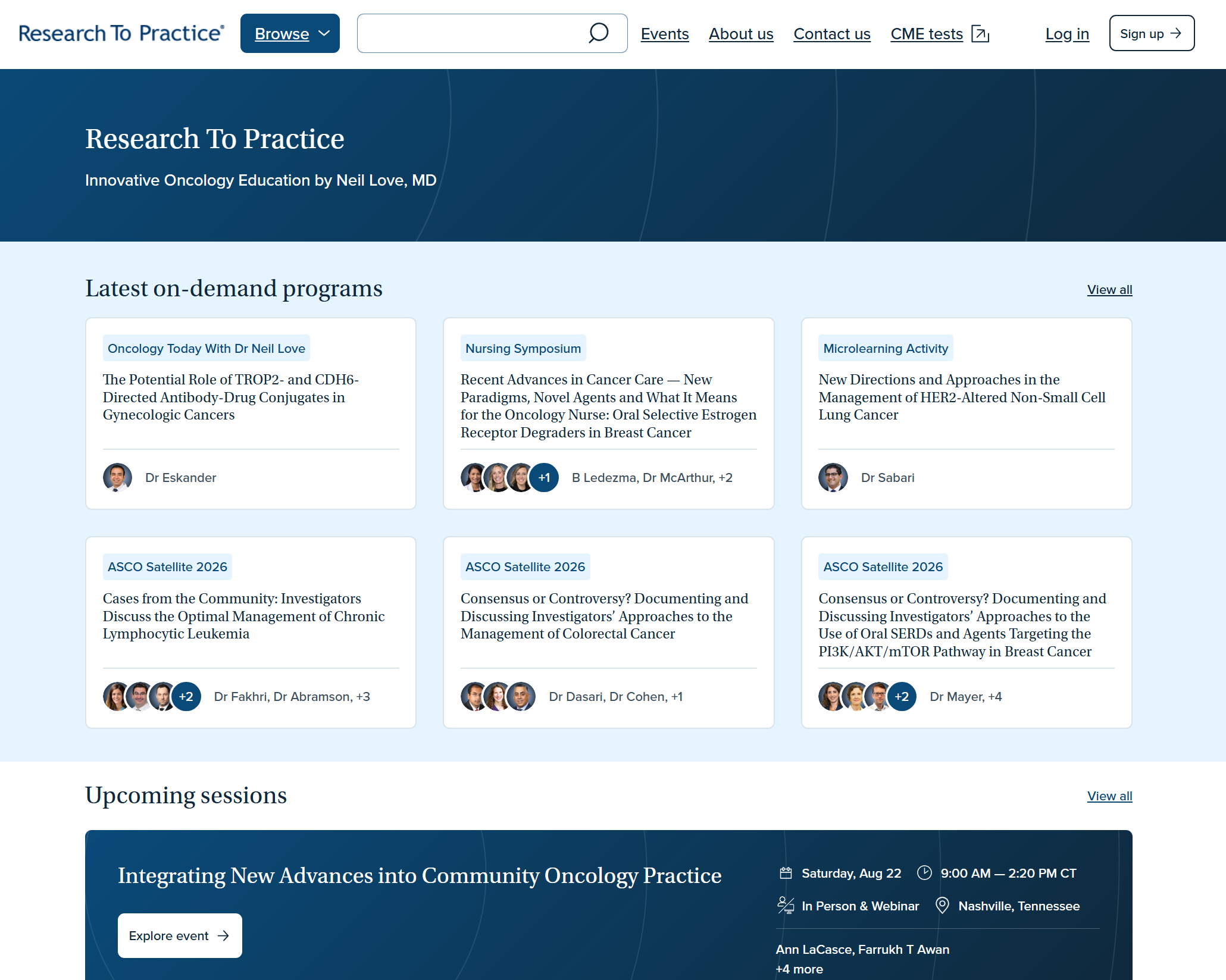
Oncology continuing medical education platform interface

Continuing Medical Education Platform

Confidential client

Relevant foundation: governed education workflows that connect live and enduring programs, assessment, certification, and clinician engagement.

(), part of the family of health companies, is a leading medical education company focused exclusively on oncology and hematology, and has delivered meaningful, relevant, and unbiased education to cancer clinicians for more than 40 years.

Geobridge built ’s system for continuing medical education activities — automating seminar operations, certification testing and education, webinars, questionnaires, and clinician pools, helping bridge research and patient care for oncology professionals.

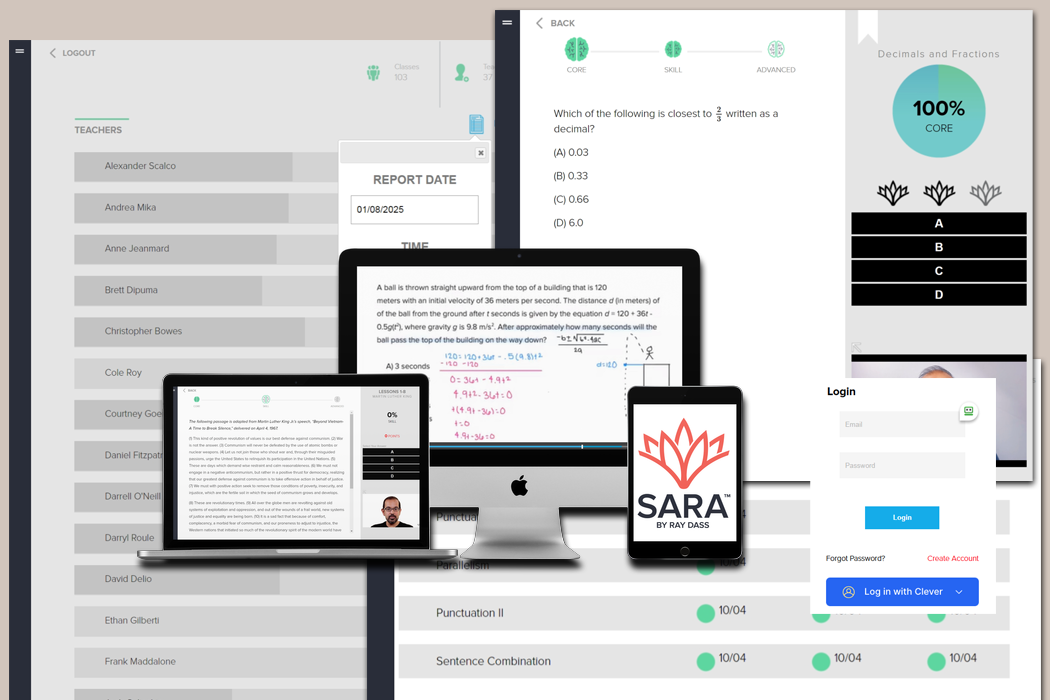
SARA e-learning platform interface

Personalized Learning Platform

— SARA

Relevant foundation: turning expert knowledge into personalized software that serves learners across formats, at scale.

Over the last decade, educators have tutored more than 150,000 students and helped produce over 1,000 National Merit Semifinalists. Geobridge developed SARA™, the platform behind that instruction — named “Best Educational Software” and “Best Test Prep Software” four consecutive years, with a proven record of improving average SAT results for schools.

Careers · Miami Station · local / hybrid

It’s All About People

For more than two decades we have engineered systems that help people and businesses:

SEND MONEY · TEACH CHILDREN · RUN COMPANIES · MAKE PEOPLE HEALTHY · BUILD RESTAURANTS · CHOOSE INVESTMENTS · MANAGE WEALTH · SELL INSURANCE · PROTECT THE ENVIRONMENT · PLAN TRIPS · OVERSEE PROJECTS · INFORM DOCTORS · KEEP CUSTOMERS LOYAL · RESEARCH MARKETS · CONNECT COMPANIES · TEACH LANGUAGES · AND MUCH MORE…

We were only able to do it because of the quality and dedication of our teams. We are hiring in Miami, FL for work on applications that millions of people rely on every day.

Agentic AI Developer

Enterprise AI agents & workflow automation · 2+ years · LLMs, RAG, Python, APIs · Miami, FL

Apply

Private AI Systems Developer

On-premises AI, private agents & model training · 3+ years · LLMs, fine-tuning, RAG, Python · Miami, FL

Apply

Front-End Developer

Web application front end · 4+ years · HTML, JavaScript, CSS, Web APIs · Miami, FL

Apply

.NET Application Developer

ASP.NET & Razor Pages, front & back end · 5+ years · C#, .NET Core, SQL · Miami, FL

Apply

Contact

Bring us one workflow and one business number.

Tell us what must improve and what cannot be disrupted. We will give you a plain-English view of fit, data and control requirements, total-cost drivers, implementation impact, and the smallest production step worth taking.

Accepting select discovery engagements

What you send here is used to reply to you — nothing else. It is never shared, sold, or used to train an AI system.

The information provided on this website is for general informational purposes only and is not intended as professional advice. While we strive to ensure the accuracy of the content, we make no guarantees about its completeness or reliability. Use of this website is at your own risk. We are not responsible for any losses or damages resulting from the use of the information on this site.

© Copyright Geobridge 2026

Back to top ↑